

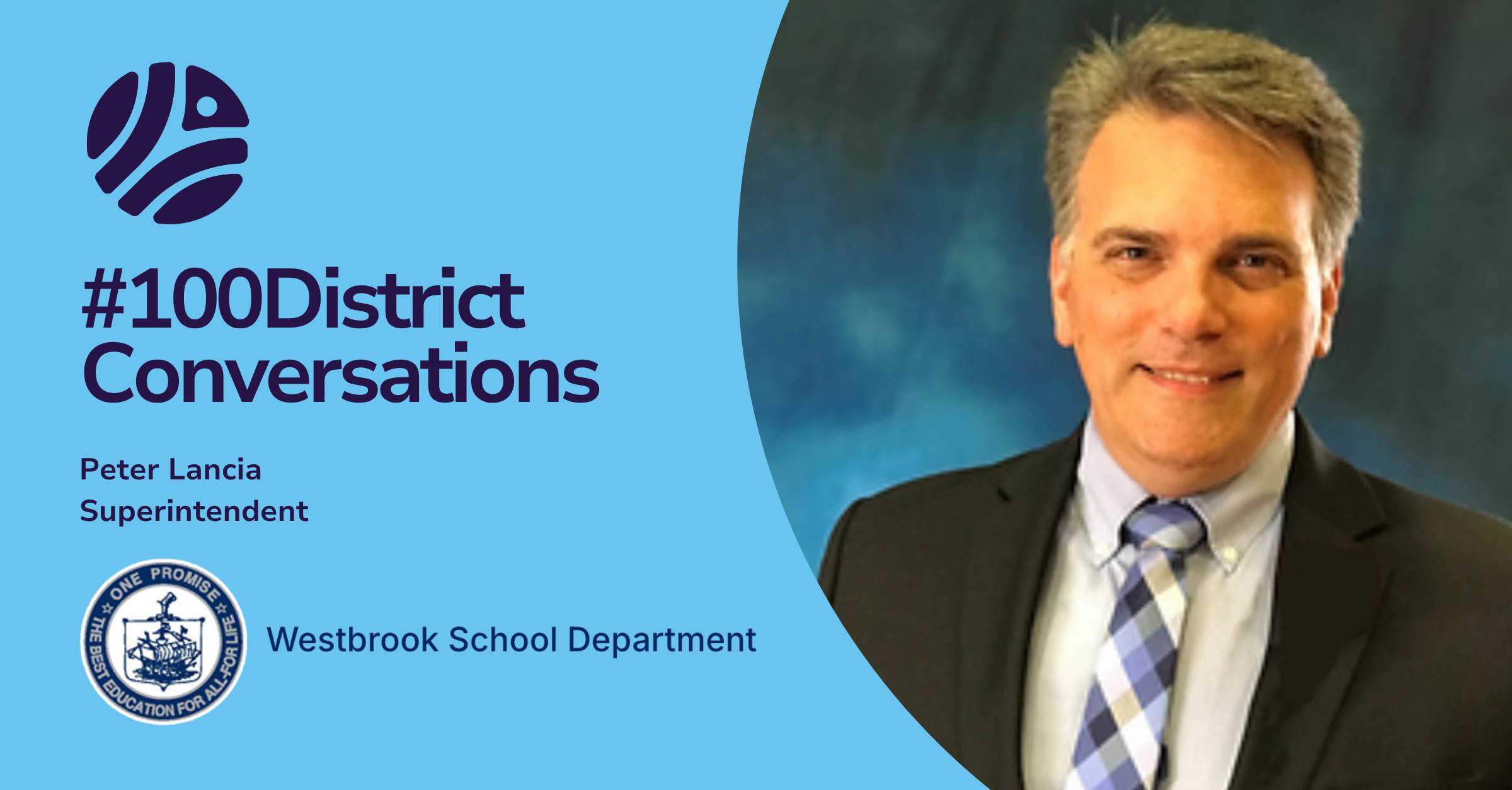
Incredibly excited to wrap up #100DistrictConversations this with convo #99 today and conversation #100 coming later this week. We are wrapping strong with inspiring leaders like Peter Lancia, Superintendent of the Westbrook School Department in Maine.
"The pendulum can swing a lot in education, but over my 10 years in this role, I've aimed to keep us balanced, really focused on making informed instructional decisions. I was teaching at a time when teachers were empowered to make good calls in their classrooms, and I advocate for that same trust now. Even though the field has shifted toward more directives, if public education is going to persevere, we have to remember we're a profession built on deep knowledge and good instincts, not just compliance.
That belief shapes how I lead. Our district doesn't run on a lot of mandates. Standards are our bottom line, and we share some common programs, but those aren't only things we use to teach kids to read and write. There's real room for teacher autonomy here. Teachers must be responsive to learners and have the skills, knowledge, and capacity needed to do that.
We're fortunate to have weekly early release days, and in the past we have run once-a-month Choice Learning. This was time for teachers to design a learning project around something they're genuinely into and that will make an impact on student learning, whether that's outdoor education and agriculture or a school-wide initiative. There are sometimes light parameters, like guided choice around numeracy if a school needs to move that needle, but otherwise its intrinsic motivation driving the work. Choice Learning has produced entirely new courses, including a high school class on local history and indigenous peoples built around our own geography.
I try hard to limit how many things we ask teachers to hold at once. This year, were intentionally going deeper on one area: Sheltered Instruction Observation Protocol (SIOP) strategies. This addresses a district-wide need to increase language and literacy achievement. It also allows our staff to align around a shared practice and dig into it over a couple of years instead of chasing new initiatives. Almost 1/3 of our students are multilingual learners, many spending most of their day in general education classrooms, so common SIOP practices support them right where they are. We're expanding our current knowledge and practices. For example, we've posted learning targets for years, and now were naming and posting language targets too, pushing ourselves to think explicitly about which instructional practices promote language acquisition.
When consultants came in to work with our teacher leaders around SIOP, what struck me most was watching those teachers feel bolstered by the realization that some of the strategies were things that many of our staff have already embraced as best practice. Growth doesn't always require a new initiative. Sometimes it just takes the space and trust to let good judgment do its work."