
#94 Leslie-Bernard Joseph
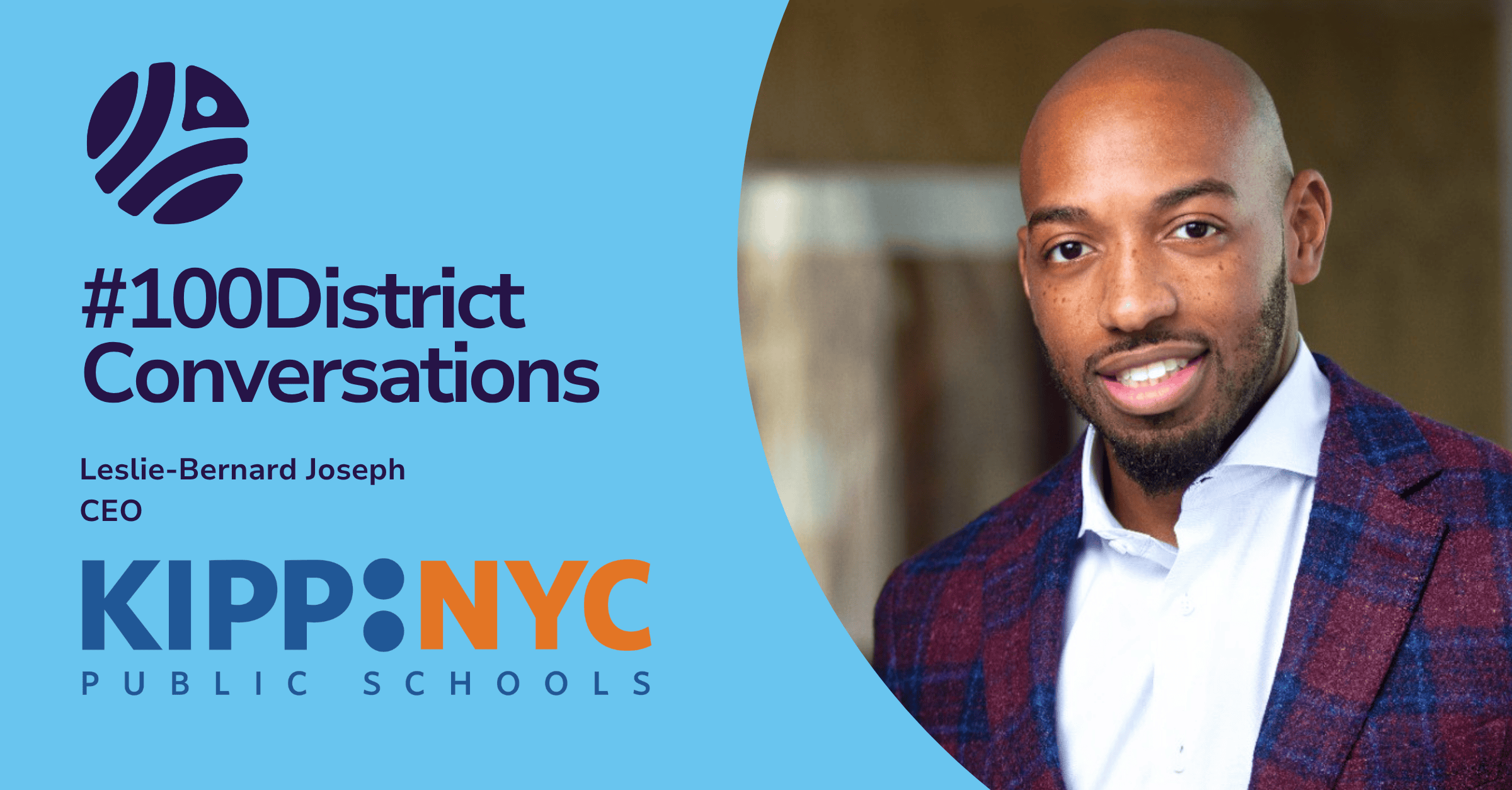
What does it really mean to never stop learning? Leslie-Bernard Joseph has spent his career thinking about this question. From Teach For America to founding schools to pursuing a joint law and education degree, each experience has shaped how he thinks about adult learning, approaches problems, and creates conditions for genuine adult growth.
I'm grateful for the time with my "Kinfolk 39" Pahara-brother, also known to most as LBJ, for conversation #94 of #100DistrictConversations. LBJ recently took over as CEO of KIPP NYC and his thoughts on professional learning show his deep commitment to intention and integrity.
“Professional development is less of a set number of minutes during the week, it's more like a constant mindset.” Adults learn by doing, not by passively listening. We need time to synthesize, talk with others, and reflect before applying new ideas in context. But creating the psychological safety that allows people to try something different is both the hardest and most exciting part.
Agency matters enormously too. “Adults are not static human beings. We’re constantly changing and experiencing the world through different lenses.” We show up carrying everything happening in our lives, and sometimes the most honest thing someone can say is ‘this isn't the right moment for me to take this on.’ At the same time, adults want to feel some degree of influence in the systems they operate within. Leaders have to tell the story behind decisions, create emotional connection to the work, and give people real opportunities to integrate change rather than just receive it.
In his role, Leslie-Bernard is no longer designing every moment of a professional learning experience. He's focused on building the structures and shared vision that allow leaders to create meaningful experiences for their teams. He visits campuses to stay connected rather than becoming a distant voice, and watches closely for the speed of change. How quickly new behaviors show up in practice is one of his most important leading indicators.
One tension he's sitting with: when we focus deeply on one priority, skills we thought were solid can quietly slip. That's not failure. It's the reality of cognitive load, and something leaders have to actively monitor together. The ROI conversation in education also deserves more nuance. Meaningful learning compounds over time, and we should be careful about measuring growth only in short windows.
The question of what role AI can and should play in all of this is one he's actively exploring. The promise of personalized learning has been in the field for a long time. “But we haven't figured out personalized support for educators at any scale.” There's real potential in reducing cognitive lift in areas like grading, differentiation, lesson planning, content delivery, and SEL, freeing teachers to focus their energy where they are strongest and where human judgment is most irreplaceable. The tool always has to match the actual need, not just the loudest trend.
If you know of a district leader who should be featured in our #100DistrictConversations initiative, please use this nomination form.