#84 Heath Rocha
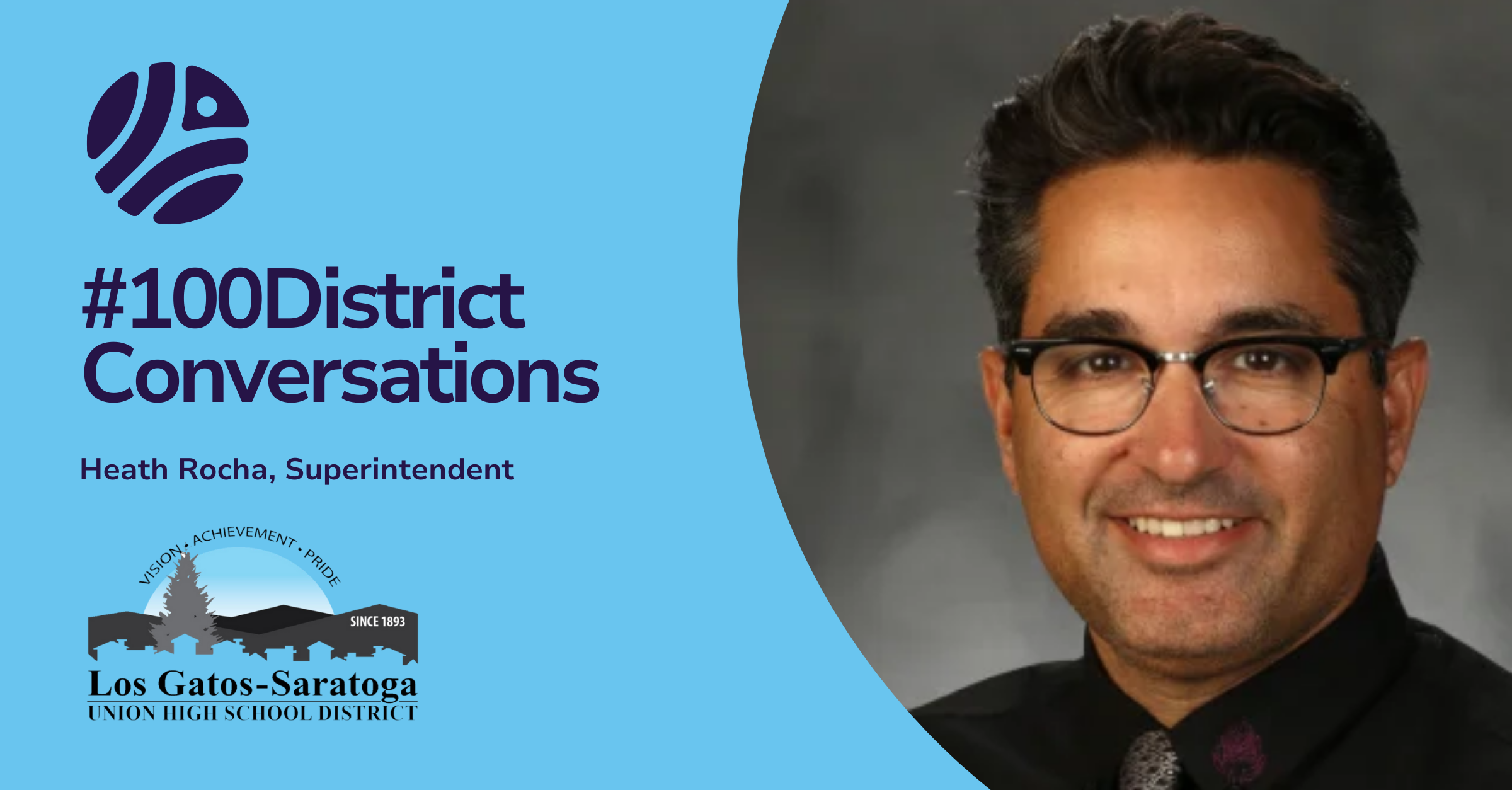
Conversation #84 with Superintendent Heath Rocha of Los Gatos-Saratoga Union High School District in California surfaced something I keep coming back to. Research-driven practices only reach their potential when supported by strong cycles of continuous improvement. As Heath scales this work across all departments, implementation gaps are the real obstacle, not vision or will.
He has thoughtful strategies for supporting teachers around Essential Learner Outcomes (ELOs) and Universal Design for Learning (UDL) principles, and I left wondering what role custom AI bots could play in strengthening implementation fidelity and measuring ROI. That question led me to write my recent blog post. Here's the summary of my conversation with Heath:
"Leading a high-performing high school district with the state's highest ELA performance creates a unique challenge: how do you push for continuous improvement? We are currently a great school for most kids, but we want to be great for ALL kids. Even with strong results, 20% of our students haven't reached mastery in ELA and math. That’s hundreds of students who deserve better. This commitment is clearly articulated as Goal #1 in our strategic plan, giving us the runway to make sustainable change happen.
This is Year 2 of our 10-year strategic plan implementation. Our approach centers on teachers developing ELOs and common assessments for their courses and incorporating UDL principles into their instructional design to ensure access for students with various abilities and learning needs. We are intentionally going slow to build capacity and buy-in, where teachers can develop necessary skills while collaborating with colleagues. When staff feel valued and heard, they bring their best selves to work, creating the strongest environment for student success.
Our Teachers on Special Assignment spend part of their time in classrooms while scaling professional learning alongside our Associate Superintendent of Curriculum & Instruction. When we embarked on this professional development effort, we relied on training led by outside experts. However, we have found that our teachers tend to trust in-house experts who are not too far removed from the classroom rather than professional trainers.
New teachers from CA universities are coming in with UDL concepts embedded in their credential programs, which is allowing us to make quicker progress. Implementation of UDL principles helps us ensure access for all students by reducing barriers in the learning experience; this also allows us to create a strong Tier 1 system of interventions serving every learner. On the other hand, teachers developing ELOs, success criteria, and aligned assessments, with opportunities for students to reflect on their own learning, helps us develop self-empowered learners. Our classroom observations focus on asking students: 'Where are you in your learning process? Where are you headed next & how do you get there?'
We believe that in order to make meaningful change, we have to align all our efforts toward common goals. To that end, we are using departmental collaboration time as well as our districtwide PD days to ensure that every course taught in the district will develop 2 units with identified ELOs, success criteria, and assessments this year. Teachers undergoing evaluation develop observation goals aligned with these initiatives. Classroom observation feedback is based on the PD initiatives. The biggest progress happens when teachers can align around essential questions, opening natural opportunities for collaboration and peer to peer observation. We are building the foundation so when students experience these changes at scale, the impact will be transformative.
We are also addressing emerging challenges like AI usage, requiring teachers to be explicit about usage expectations and educating students about acceptable and unacceptable uses of AI in completing coursework. We will be building a committee to plan visits to districts to see how AI is being used effectively. And as we revisit our graduate profile, ELOs will help connect learning expectations with assessments and opportunities for student agency while implementation of UDL principles will ensure access for all students."
If you know of a district leader who should be featured in our #100DistrictConversations initiative, please use this nomination form.