
#88 Dave Quinn
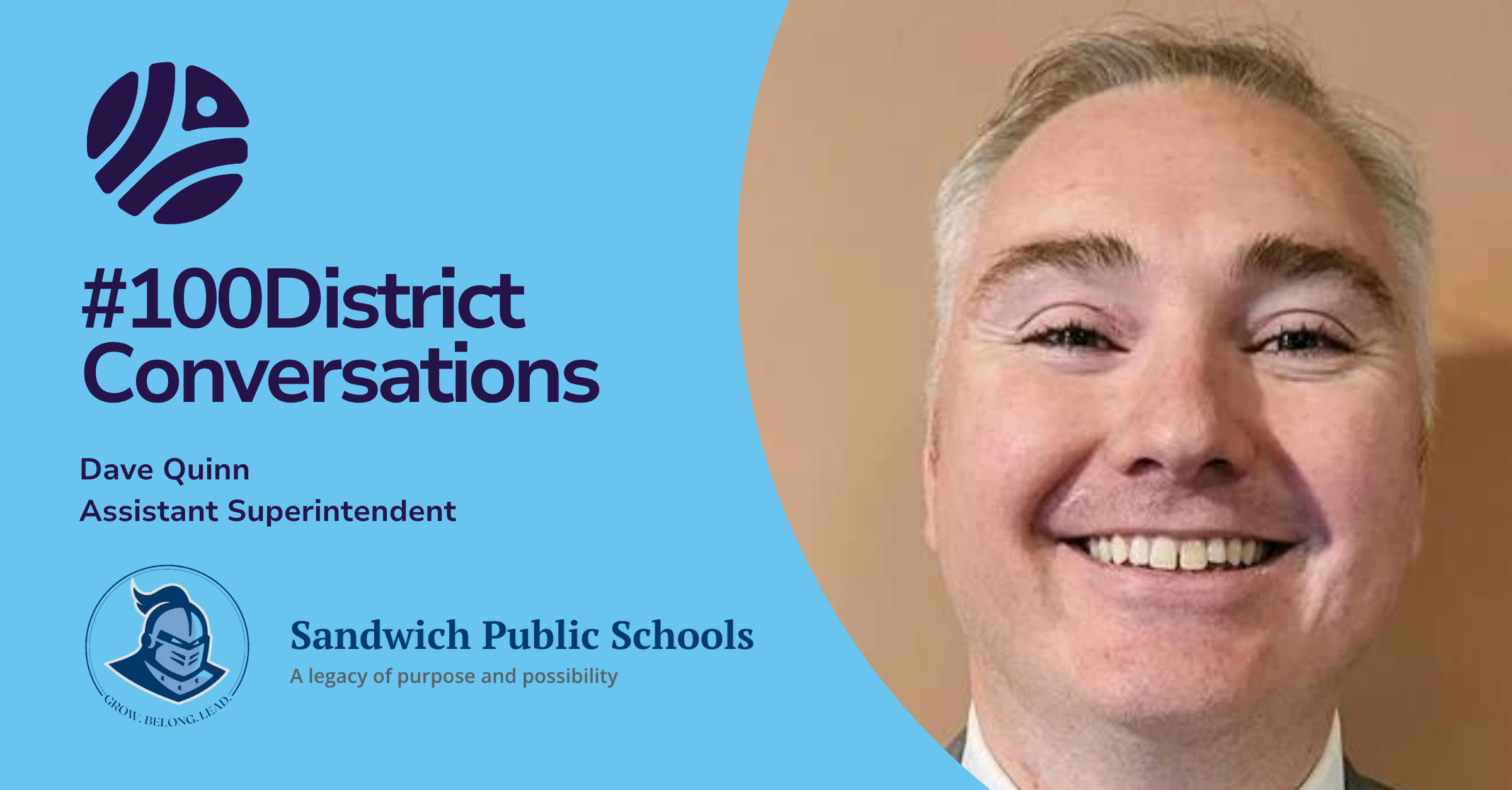
We are nearing the culmination of #100DistrictConversations, and it has been fun reaching out to long-time friends in district positions for this final push. Conversation #88 with thought partner, Dave Quinn, Assistant Superintendent of the Sandwich Public School System in Massachusetts explores his thoughtful process for pacing educator professional learning so that it is student-centered and practical for district implementation.
"When I stepped into my role as Assistant Superintendent, overseeing everything from DEIB to wellness and more, one of the most exciting shifts I experienced was in how the work happens. As Director of Technology Integration, I was driving focused initiatives with smaller teams. The assistant superintendent role requires you to think more systemically, listen more intentionally, and create a vision that stakeholders can see themselves in.
That's the foundation we have been building in Sandwich. We recently launched a new strategic plan, called Learning and Leading. From it, we identified 7 core instructional practices, inspired in part by the work coming out of our deeper learning cohorts. We have called them our Signature Practices: teacher moves grounded in knowing students, inclusion, authenticity, agency, student discourse, foundations, and growth. These launched in January, and our upcoming professional learning focuses on helping educators identify where their current instruction already connects to the practices. We want to celebrate what's happening, make the work visible and tangible, and ensure our teachers feel highly supported, not overwhelmed.
A lesson I've taken from the thinker Yong Zhao is that schools are ecosystems of competing needs. When we shift things, we have to pay attention to the load-bearing walls. Change that ignores what's holding things up can do real damage. So we are being intentional, hosting a Deeper Learning Expo on a PD day so teachers can share their work with colleagues, seeking out HQIM that reflects our values, and bringing in industry professionals to support authentic, project-based learning experiences.
Regarding AI, we are in early days, but moving thoughtfully. We have drafted guidelines informed by teacher feedback and are creating space for honest, sometimes difficult conversations. What AI is surfacing, more than anything, is deeply human. We are facing questions about critical thinking, intellectual ownership, and professional habits. I think about it this way: precision often requires three points of reference. As we navigate AI in education, properly triangulating between a teacher, an AI tool, and a coach or peer matters. Without a third perspective, we risk losing the critical lens that makes teaching and learning meaningful.
Putting care and humans at the center is how we make sure we shape AI in education rather than have AI shape us. With that foundation in place, we will be able to focus more on the question, ‘How are we preparing students to define the age of AI?’ I’m always curious how other districts are thinking through that."
If you know of a district leader who should be featured in our #100DistrictConversations initiative, please use this nomination form.