
AI Doesn’t Have an Evidence Base, But Teaching Does
by Shawn Rubin
During the blended learning era, we put thousands of kids on digital platforms with the promise of transformation. The reality was that most of these tools had no rigorous evidence base behind them. Some eventually developed one, but as a field, we were scaling solutions before we had proof they worked. It was a collective misstep, not a failure of any one product or approach.
What’s interesting is that all along we had an evidence base for what actually works in education. Research-based pedagogical strategies have been proven for decades. Culturally responsive instruction works. High-quality curriculum materials work. Student-to-student academic discourse works. Learning science has accelerated what we know about how students and adults learn. The research is deep and the results are clear.
So if we know what works, why isn't it happening consistently in classrooms?
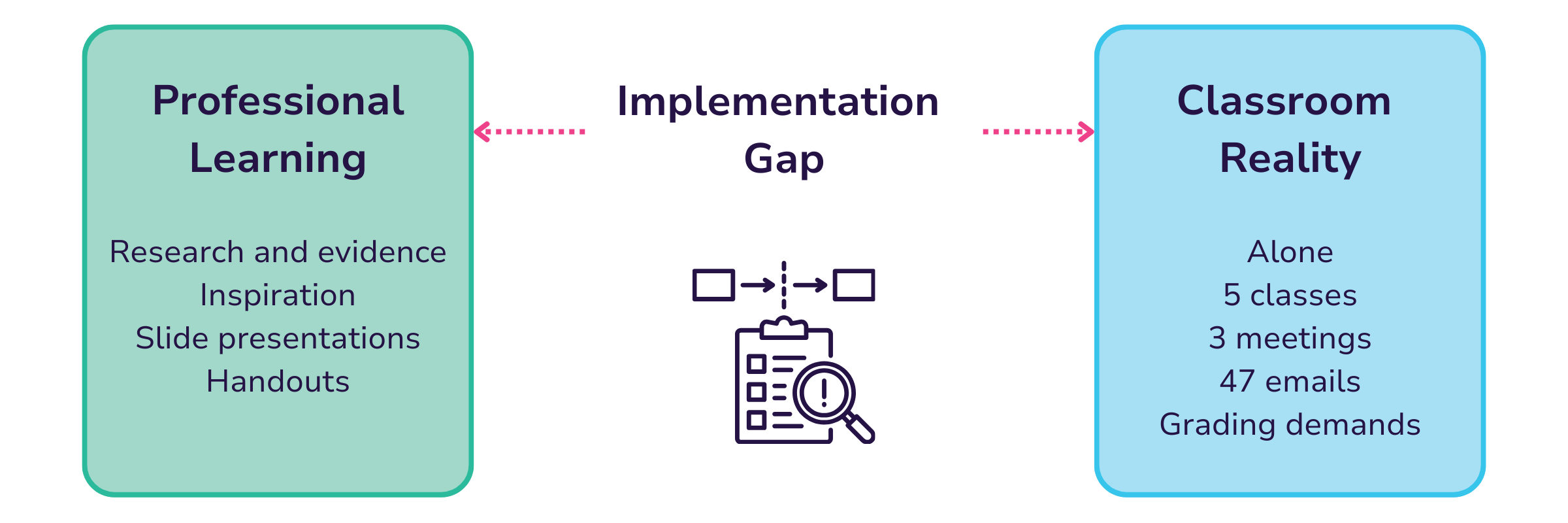
Teachers are doing their best to implement what they have been trained to do. But the cognitive lift can be brutal; planning takes extensive time and most are doing it alone. Think about what happens after a teacher attends a professional learning session on facilitating student-to-student academic discourse. They get inspired. They take notes. They leave with a slide presentation and handouts and good intentions. Then they go back to their classroom, solo, and face the actual work of implementation.
Now they need to design discussion prompts that invite multiple perspectives. They need to anticipate how different students might enter the conversation and plan scaffolds for those who struggle to participate. They need to teach sentence stems and discourse moves while listening for misconceptions in real time. All while teaching five classes, attending three meetings, responding to 47 emails, and somehow finding time to grade. If they are lucky, they have an instructional coach who can walk them through what they learned. But most teachers do not have that luxury.
This is where the gap opens up. Not in the evidence base. Not in teachers' commitment. But in the complex challenge of implementation.
What if AI could help us bridge that implementation gap? Not by replacing teachers or coaches, but by extending support. What if we could create tools that help more teachers actually implement the evidence-based strategies they learn?
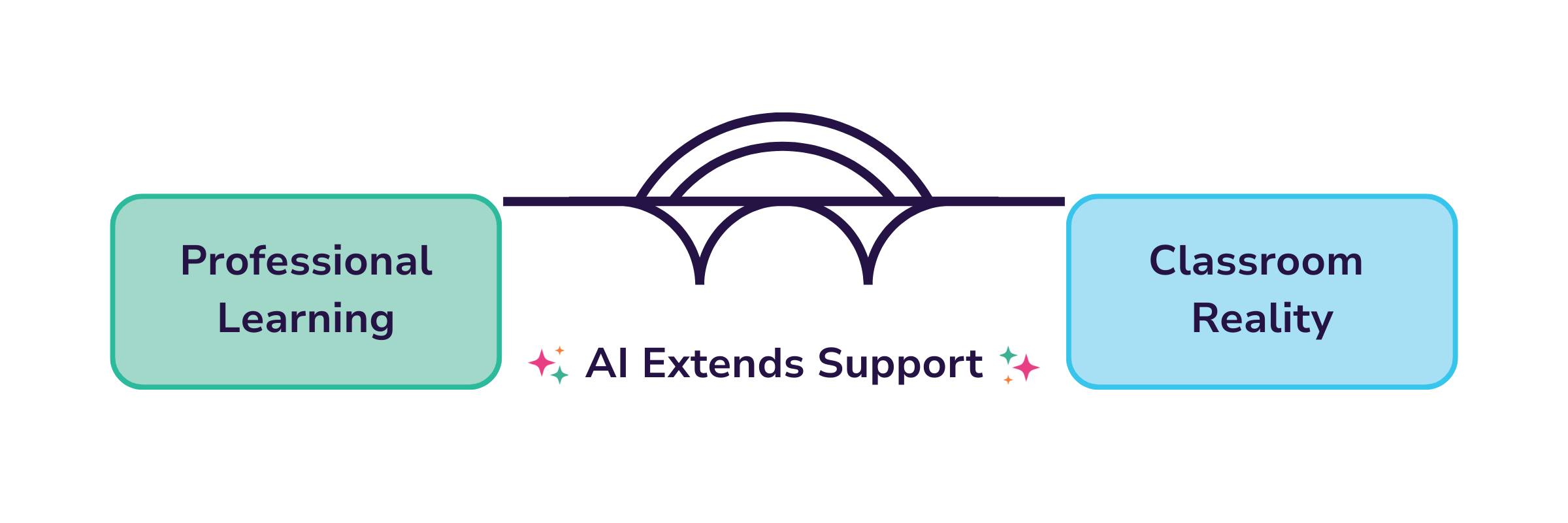
This is the hypothesis we are testing: If we can lighten the load of implementation, more educators will use evidence-based practices more often with more students. And if more educators are consistently implementing proven strategies, student outcomes improve because the strategies themselves are already backed by research.
We are not measuring whether AI works. We are measuring whether AI helps us do more of what we know works.
Here is what makes this AI moment different. Most districts have robust strategic plans, instructional frameworks, and priority practices as readily accessible public documents. These resources reference district-specific curriculum and professional learning. Hopefully all of it is grounded in evidence.
Now imagine a district leader uploading these resources into an AI tool trained to reference district materials first, before seeking answers from a generic large language model like ChatGPT. AI can be built into closed systems trained on local resources, reducing bias and “hallucinations” (nonsensical responses generated by AI).
Let me give you a concrete example.
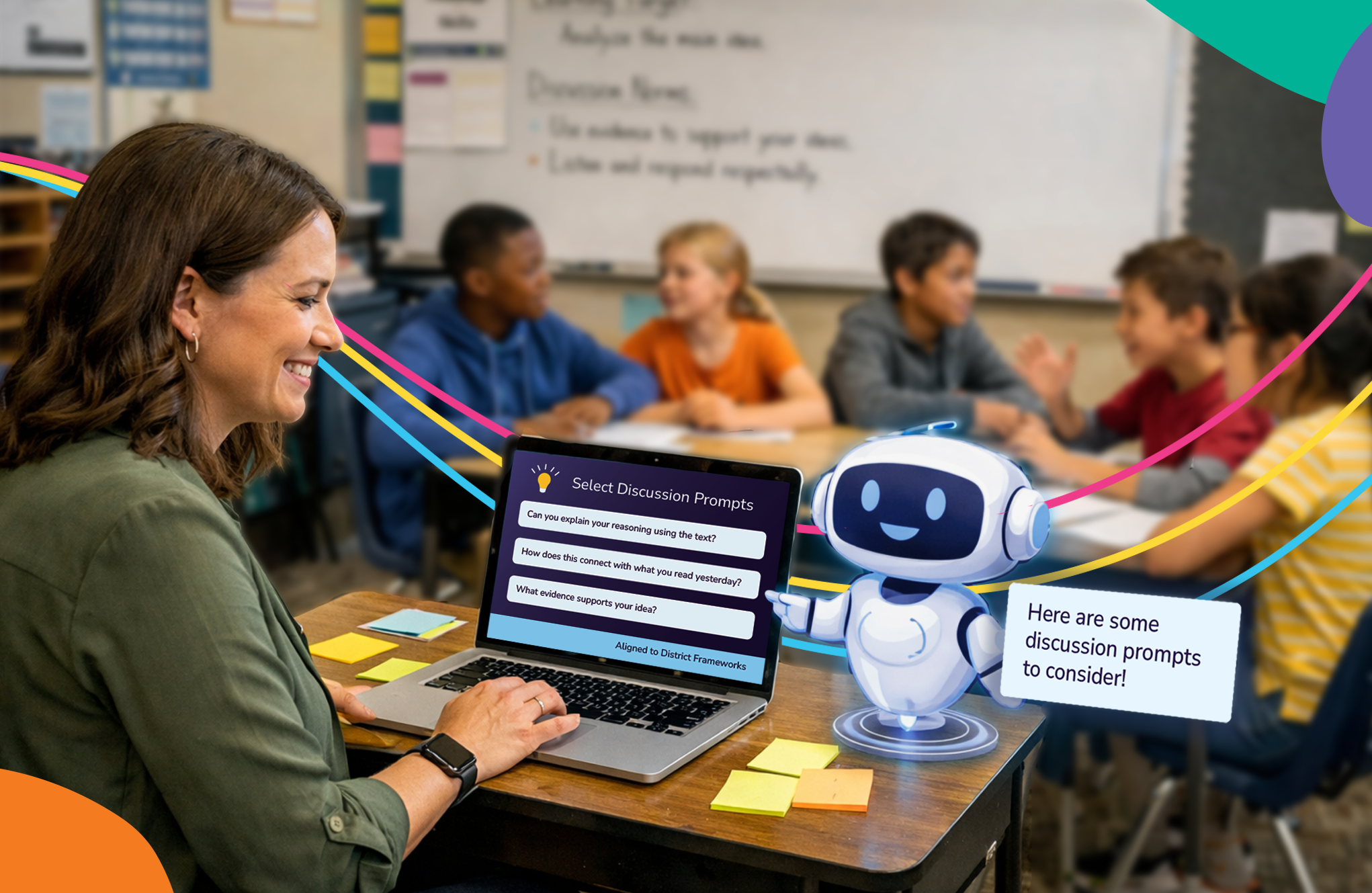
Remember that teacher working to facilitate student-to-student academic discourse? Now imagine that teacher uploading their curriculum unit into a home-grown AI tool and receiving discussion prompts directly aligned to district instructional frameworks and recent professional learning. Instead of having to create their own differentiated sentence stems daily, the tool offers multiple options, rooted in district-specific priorities, for the teacher to choose from. Everything the tool produces aligns directly to the professional learning the teacher received.
These are not generic tools, nor are they a replacement for teacher expertise. The teacher still decides which suggestions make their way into classroom conversations. But now the teacher has a "coach" sitting beside them at 6:00PM on a Tuesday when no one else is around to help. This is an AI opportunity to close implementation gaps while supporting teachers at a depth we have never seen before.
At Throughline Learning we are co-designing and testing these AI solutions with district leaders, teachers, and AI working groups. Our measure is not whether teachers like the tools. It is whether evidence-based strategies are happening more consistently, more deeply, and reaching more students.
Our job is not to add more initiatives. It is to help school districts implement the ones they are already committed to.
We have spent 15 years exploring the gap between professional learning and classroom practice, and we have learned that closing that gap requires more than inspiration. It requires ongoing support that meets teachers in the moment they need it most. That is what we are building with AI. Not a replacement for human coaching, but a way to make coaching capacity reach more teachers more often.
If we get this right, we won't be scaling AI. We will be scaling learning science itself.
Learn More
At Throughline Learning, we know that effective instruction will always be about human interaction. We help districts establish thoughtful AI strategy that boosts your educators’ capacity, confidence, and creativity in this new era of possibilities. Explore our Fuse AI Guide to learn more about our AI task force facilitation and professional learning offerings.
About the Author
Shawn Rubin is the Executive Director of Throughline Learning (formerly Highlander Institute) in Providence, RI. He is an internationally recognized thought leader and speaker with deep expertise in classroom coaching and change management strategies for building and district leaders. In 2018 Shawn co-authored the book Pathways to Personalization: A Framework for School Change, which details Throughline Learning's community-driven school improvement approach. Shawn prioritizes supporting at least one of Throughline’s portfolio schools every year to build connectivity between the organization’s classroom implementations and national field building efforts. He has won several innovation awards for his work in the nonprofit sector, including iNACOL's annual award for Outstanding Individual Contribution to Personalized Learning.